
Most Downtime Starts Small
Of unplanned downtime incidents linked to equipment failure.
Of failures linked to worn equipment and delayed maintenance.
Most unplanned stops involve equipment failure—and most of those start as wear or maintenance put off too long.
“The question is no longer whether you can afford to maintain critical equipment. It's whether you can afford not to.”
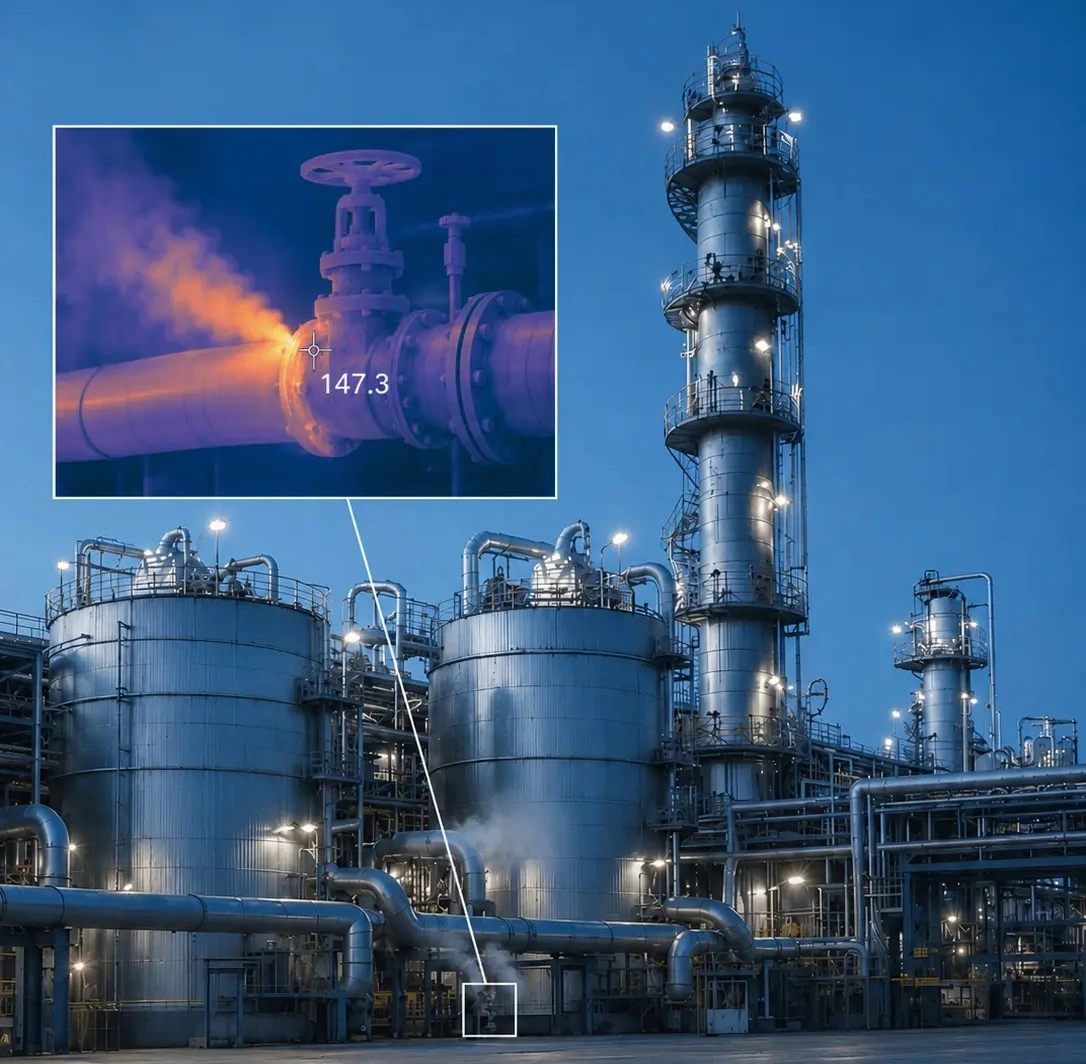
Most equipment failures begin as something small. A leaking valve. A worn seal. A failing bearing. A pump working harder than it should. Individually, none of these issues appear critical. Collectively, they account for a significant share of unplanned downtime across industrial facilities.
According to industry surveys, equipment failure is linked to 42% of unplanned downtime incidents, while more than 60% of failures originate from worn equipment and delayed maintenance. As energy costs rise across East Africa, these failures cost more every year.
Small Leaks. Large Bills.
“The leak did not get bigger. The cost of ignoring it did.”
What a single unnoticed leak can cost you over a year—shown by size on the left and money on the right.
Not every loss announces itself.
Some appear as downtime, equipment failure or emergency maintenance. Others remain embedded in day-to-day operations—small inefficiencies that persist quietly in the background.
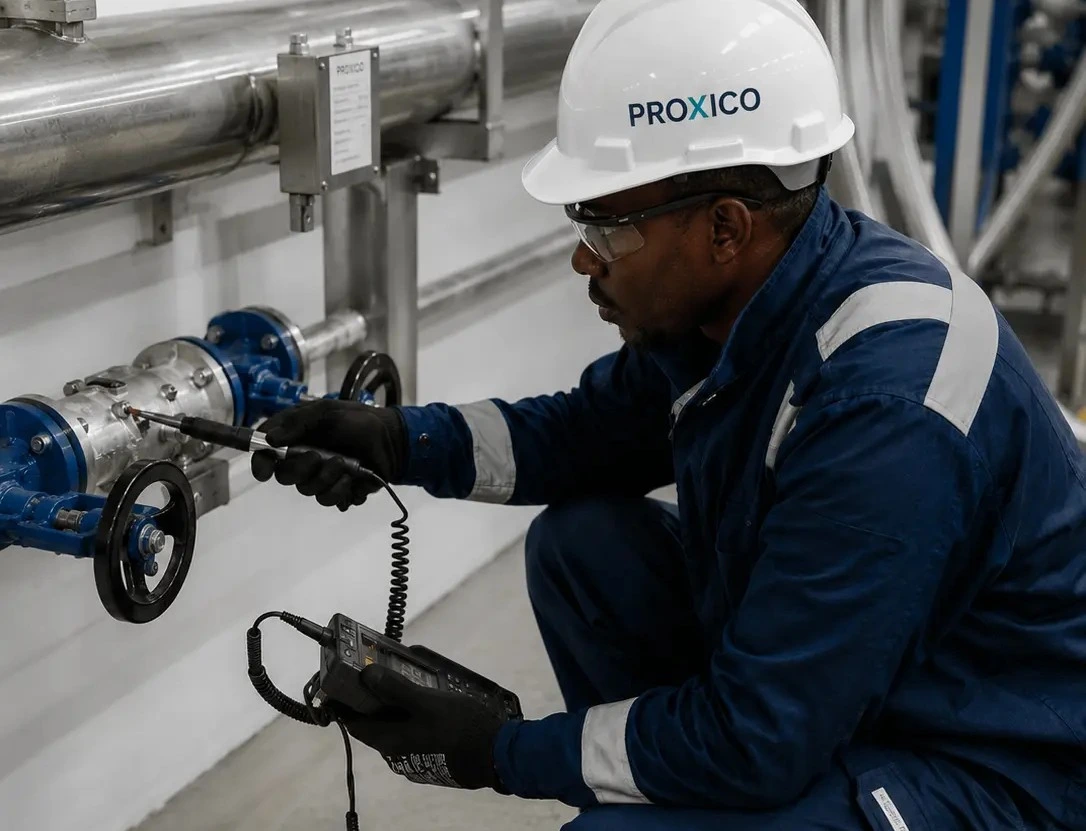
A leaking steam system. Escaping compressed air. Equipment operating below its intended performance.
Individually, the impact appears modest. Over thousands of operating hours, it rarely remains that way.
Unlike a breakdown, these losses rarely demand immediate attention. That is often why they remain unresolved.
Where the Losses Hide
Two leaks were easy to price because they are loud, at least to the right instrument. The rest of the family is quieter. Each small failure has a signature on the plant floor and, more usefully, the cheapest instrument that finds it before it reaches a work order.
The table below summarises where small failures typically appear, how they're detected, and the type of financial impact they can create before a breakdown occurs.
| Failure mode | On the floor | Annual cost (USD) | Annual cost (KES) | Detection |
|---|---|---|---|---|
| Passing isolation valve1 | A valve shut on paper but warm on the downstream side; a tank that slowly refills against a closed valve. | 3–15k | 0.4–2M | Thermal imaging across the seat; downstream temperature check. |
| Steam leak2 | An audible hiss and a visible plume at a fitting, gland or trap; condensate tracking on lagging. | 8–40k | 1–5M | Visual + audible survey; orifice estimate against line pressure. |
| Compressed-air leak3 | Inaudible over plant noise; only found when the compressor never unloads. | 1.5–8k | 0.2–1M | Ultrasonic leak survey during a quiet shift. |
| Failed-open steam trap2 | A trap blowing live steam to condensate return; return line running hot. | 2–12k | 0.3–1.5M | Trap testing—ultrasonic or temperature—on a fixed schedule. |
| Pump off its duty point4 | A pump throttled against a valve, or oversized and recirculating; high power for the flow delivered. | 4–23k | 0.5–3M | Power draw vs. flow, checked against the pump curve; vibration trend.Duty-point drift also shortens seal and bearing life. |
1 ISO 5208 seat-leak rates · 2 DOE Steam Tip / Spirax Sarco · 3 ASME EA-3 · 4 Pump curve · ISO 14414 · Indicative USD/KES bands for a mid-sized East African plant, 2026 conditions (~130 KES/USD).
Cost bands are order-of-magnitude only—not exact quotes. Use them to put a figure next to a known loss before the next shutdown list is written.
The detection column is often the most practical place to start. Simple inspection or routine condition monitoring can catch many of these losses long before they become visible.
Many of these issues originate much earlier than the maintenance workshop. In practice, they often begin at equipment selection, when someone swaps in a like-for-like replacement instead of checking it against the actual process conditions.
The New Competitive Reality
“For competitors in lower-cost markets, inefficiency is expensive. For Kenyan manufacturers, it is increasingly unaffordable.”
The economics of reliability have changed. A leaking steam valve in 2026 wastes the same amount of energy it did in 2020. The difference is what that wasted energy now costs.
As electricity tariffs, forex exposure and operating costs continue to rise across East Africa, every avoidable loss inside the factory gate becomes more expensive.
The chart below illustratesThe graph alongside illustrates the challenge. Kenyan manufacturers now pay some of the highest industrial energy costs in the region.
Kenya's industrial electricity cost compared with regional peers—each wasted kilowatt costs more here than in lower-tariff markets.
The Next Frontier
“The next frontier of industrial reliability is not bigger equipment — it is refusing to leave small failures uncosted.”
Over the years, I've seen manufacturers spend months negotiating tariffs, procurement contracts and capital budgets.
Yet some of the most meaningful improvements often came from something far less visible:
A steam leak, finally fixed. A failing valve, rebuilt to the right specification. A system, finally running as designed.
The biggest opportunities rarely announce themselves. They usually look insignificant at first.
That shows up most often in the components that isolate and move the process: the industrial valves holding steam and pressure, and the industrial pumps running below their intended duty point. If a valve is the thing you keep re-packing, it is usually worth revisiting how it was selected in the first place. Size the replacement against the line with the valve sizing calculator or the pump duty calculator before it goes back in the pipe.

Most manufacturers cannot control tariffs, forex or the price of capital. They can control how efficiently their assets operate.
In a high-cost environment, that difference matters more every year.
Receive Future Industrial Briefs
We publish only when we have something worth sharing.
We only use your address to send these briefs. Privacy policy
Small equipment failures: common questions
What causes most industrial downtime?
Most industrial downtime does not begin with a catastrophic failure. It builds gradually from small, overlooked issues: passing valves, steam leaks, compressed air leaks, worn seals and bearings, and equipment operating outside its design envelope. Individually these appear insignificant, but collectively they account for a large share of unplanned downtime and energy waste across manufacturing facilities.
How expensive are steam leaks?
A single steam leak roughly the width of a pencil (around 6 mm) can waste energy worth approximately KES 3.5 million per year. Because the leak itself does not grow, the loss is easy to ignore, yet it recurs every operating hour and rises in cost as energy tariffs increase. Steam leaks are among the highest-value, fastest-payback reliability fixes in most plants.
Why are compressed air leaks difficult to detect?
Compressed air leaks are often barely visible and inaudible over normal plant noise, so they go unnoticed during routine walkdowns. A small 3 mm leak can still waste energy worth around KES 320,000 annually. Ultrasonic leak detection is typically required to locate them reliably, since the human ear cannot pick up the high-frequency turbulence a small leak produces.
What is industrial reliability?
Industrial reliability is the ability of equipment and systems to perform their intended function consistently over time, without unplanned failures or efficiency losses. In practice it means systematically eliminating small failures before they compound, so a facility operates with lower downtime, lower maintenance costs and lower energy consumption than one that reacts to breakdowns as they occur.
How can manufacturers reduce downtime?
Manufacturers reduce downtime by detecting and correcting small failures early rather than replacing components like-for-like after they fail. Effective steps include ultrasonic and thermal surveys of steam and compressed air systems, quantifying losses in financial terms, prioritising high-return interventions, and adopting predictive and reliability-centred maintenance so issues are addressed before they cause an unplanned stoppage.