Why Industrial Equipment Takes So Long to Source — and What Actually Determines Lead Time
Two quotes can share a week count and still mean different finish points. State what ends when those weeks expire — and who owns freight and customs.
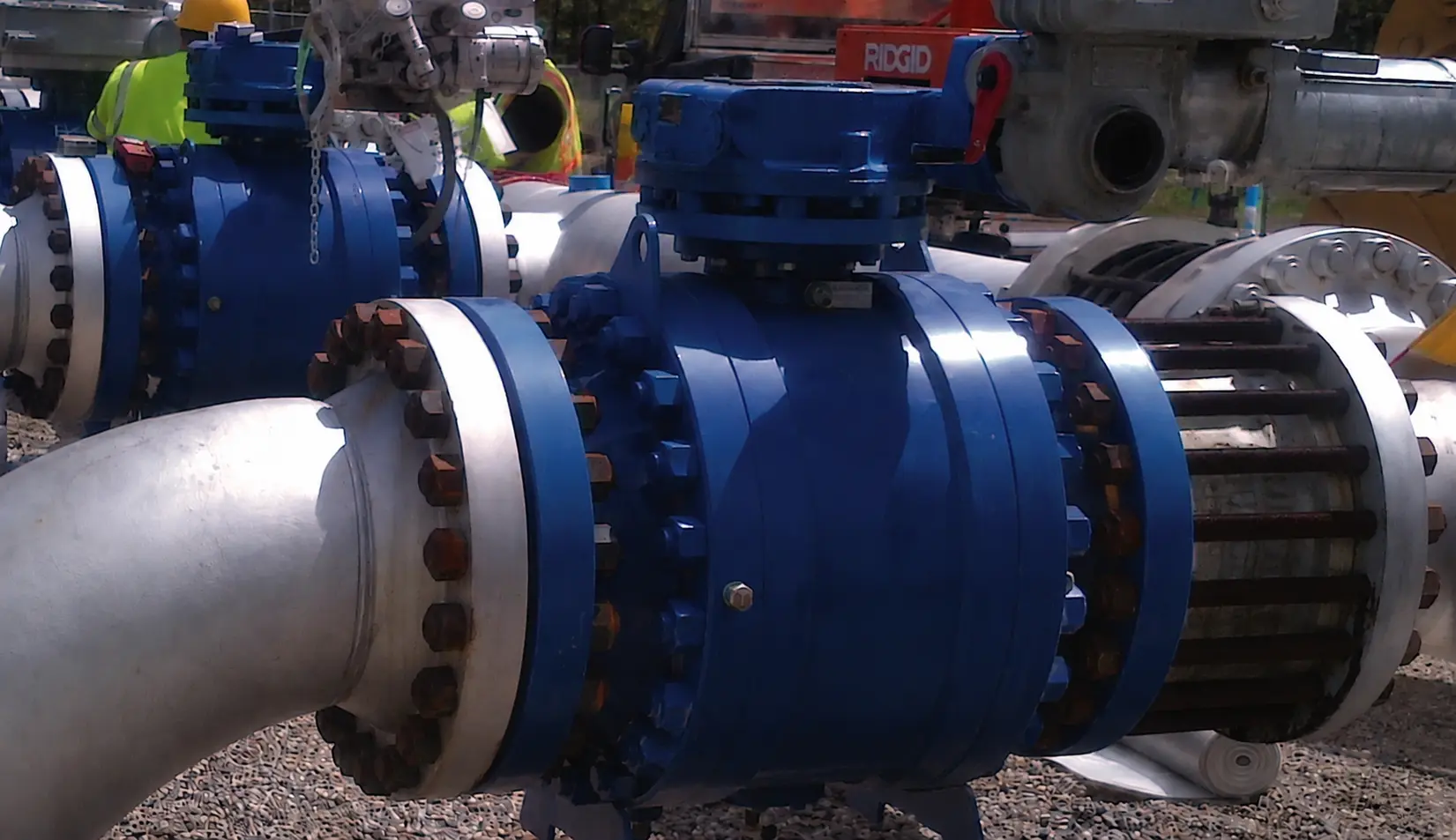
FIG. 01 · Installed valve · Kenya process line
Field NoteLive sourcing · East Africa
Igor Makariev
CEO & Technical Director
Two quotes that both say eight weeks are not comparable until each states what finishes at week eight — and who owns freight, customs, and inland delivery.
Pump lead-time regimes — category education, not a Proxico SLA
StockOff-the-shelf
Hours – ~1 week
CTO / ATOConfigured / assembled
Days – months
ETO“Fast” catalog → large custom
Often 4–6 mo · up to ~18 mo
Industry peer framing from Ekwestrel / Empowering Pumps — category education, not Proxico SLAs. API-class “standard custom” builds are separately framed around ~30 weeks before ship (PumpWorks — that OEM’s narrative). Witnessed tests, exotic metallurgy, and inspection hold points push CTO/ATO and ETO further out.
Lead time for industrial equipment is the full path from order to usable equipment on site — not freight alone. Delivery time, in logistics usage, is transit only.
Materials backlog, witnessed testing, and documentation release can sit under the same “eight weeks” label until someone states the finish point.
What finishes when those weeks end?
Ask the question that makes quotes comparable: what finishes when those weeks end?
Ready at the factory is not an on-site pump. Ex-works is not cleared at Mombasa. Cleared is not commissioned.
04ClearedStill open: inland delivery; demurrage if free time burns
05On siteStill open: install, align, commission
What does this “lead time” end on? State the milestone — and what is still open after it — before you treat two week counts as the same plan.
Milestone
What is true then
What is still open
Typical owner
Factory ready1Metal-complete
Casting, machining, assembly largely done
Tests, certificates, packing, release
Factory / QA
Ex-works2
Goods available at factory or warehouse
Freight booking, export docs, haul to port
Supplier / forwarder
Vessel sailed3
Ocean transit started
Arrival, berth, yard, customs
Carrier / forwarder
Cleared4
Import formalities released
Inland delivery; demurrage if free time burns
Clearing agent / importer
On site5
Unit at the plant gate or on site
Install, align, commission, spare kits
Site / contractor
1–5 Milestone framing synthesised from Sector Analytica’s sourcing checklist (quoted production date ≠ project clock) and vendor schedule structure (Longze — industry framing). Not a Proxico SLA.
Full references in Sources & Further Reading below.
A pump or valve can be metal-complete and still unshippable pending hydraulic or performance tests, material certificates, and inspection hold points.
Those hold points stay on the factory schedule whether or not the casting looks finished.
"A technically correct unit that arrives after the shutdown is still the wrong unit for the job."
Lead time is a chain with different owners
Industrial lead time usually runs through seven stages with different owners.
Folding them into one week count hides where the critical path sits:
Stock verification
Factory queues
Spec completeness
Supplier control
Shipping
Customs
Local delivery
Stage
What you can control
What still sits outside the plant
Front endRFQ → factory release
Complete RFQ fields (trim, seat, coating, ITP, docs); freeze clarifications before metal moves; state the end milestone on every quote
IDF path early via licensed agent (law: 2.5% of customs value); PVoC/CoC; invoice / packing / HS / B/L consistency
Export-port waits; berth and yard; inland free-time and demurrage once free days burn
CategoryStock vs CTO/ATO vs ETO
Identify the regime before treating any week count as a shutdown plan; verify exact stock model and certificates
API custom builds often framed ~30 weeks before ship (PumpWorks); ETO “fast” 4–6 months up to ~18 months (Ekwestrel peer framing)
What you control vs path physics. IDF rate: Kenya Miscellaneous Fees and Levies Act. Category bands: Ekwestrel / PumpWorks — industry peer framing, not Proxico SLAs.
Front end you can control: a complete RFQ freezes the critical path earlier — the same discipline that speeds valve quoting when enquiry fields are filled (function-first valve selection).
Kenya end you can control: lodge the Import Declaration Form (IDF) early. KEBS Pre-Export Verification of Conformity (PVoC) Manual Version 15 (19 Feb 2026) and the Certificate of Conformity (CoC) govern the conformity path.
Under KEBS’s February 2026 public notice, goods shipped from 9 Feb 2026 without a valid CoC face destination inspection (fee stated in that notice as 0.6% of approved customs value).
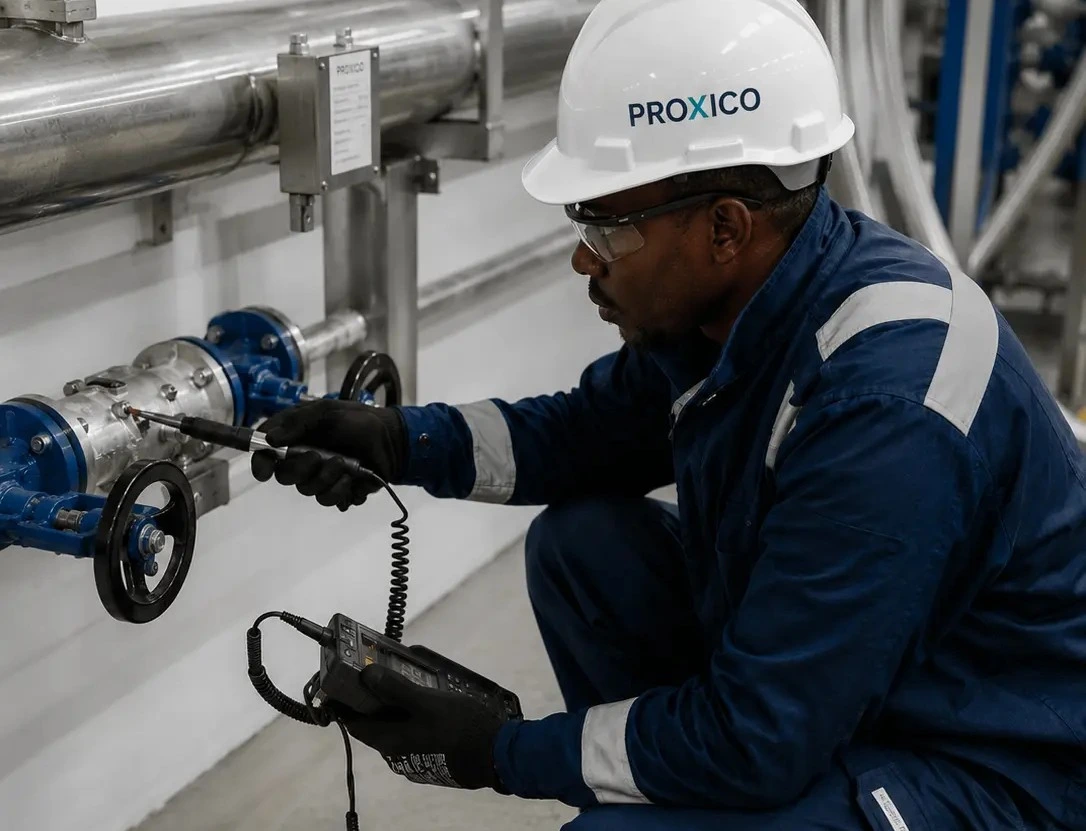
Site inspection in Kenya — by the time the unit is on site, factory, freight, and clearance have already run.
Site inspection in Kenya — by the time the unit is on site, factory, freight, and clearance have already run.
Pumps, valves, and tests that block shipment
Same industry, different schedule jobs. A stock carbon valve and an engineered API pump do not share one planning number. Treating them as if they did is how shutdowns get missed.
API-class builds add their own critical path: engineering, pattern, foundry, machining, hydrostatic and performance test.
One OEM industry framing puts “standard custom” API builds around ~30 weeks before the unit even ships (PumpWorks — that OEM’s framing, not universal law).
A missed first test adds substantial time; installation still comes after ship.
Common carbon / WCB (a standard cast-steel grade) valve service tends to move on a shorter materials path than duplex, Inconel, or high pressure class. That is foundry and alloy logic — not evidence for an industry-wide claim that “lead times have doubled.”
Treat vendor week tables as that vendor’s plan, not industry law.
Once the chain is understood, here is where to find the products: industrial valves and industrial pumps for Kenya process duty — still specified against function and conditions, not against a hopeful week count.
When an available equivalent beats waiting on the OEM factory
On East African process sites, lead times are long and spare stocks are thin — so a wrong or late unit often stays in the line until the next shutdown, or until it fails.
That is why equivalents enter the conversation on the same terms as the function-first valve guide: the week count is not the safety case.
When the line risk is real and the OEM factory path cannot meet the window: define the duty completely; require a written deviation list; and have engineering review interchangeability before you approve an available equivalent.
If the line is already down, the commercial sibling path is critical equipment replacement. This essay stays on schedule literacy; that page is for when the schedule has already failed.
Safety case, warranty, or installed-base support binds the plant; metallurgy and certificates must match the original path
Do not drop SIL / hazardous-area / relief / ESD duties to “faster industrial”
Available equivalent
Shutdown window cannot absorb OEM path; duty is complete; written deviation list can be engineer-reviewed
Unvalidated metallurgy, unknown face materials, missing datasheet, or silence treated as equivalence
Equivalents are a schedule option with engineering gates — not a default shortcut.
When the OEM path is still the correct one
"A faster quote that breaks the safety case is a different failure."
Equivalents are not a default shortcut. Hazardous-area equipment must match area classification. SIL-rated / safety instrumented / relief / ESD paths need engineering approval.
Warranty and installed-base support may bind the plant to OEM or OEM-approved parts. Do not approve unvalidated metallurgy.
A faster quote that breaks the safety case shows up later as an incident or a voided warranty. It does not show up as a late purchase order.
What the East Africa landed path actually adds
Ocean and air are not interchangeable for steel pumps and valves: weight and cost matter. Export-port waits and Mombasa landside conditions still sit on the schedule after ex-works.
Port vessel wait — late August 2026 snapshot (K+N seaexplorer)
Mombasa
~2.43 d
Shanghai
~5.21 d
Ningbo
~3.45 d
Kuehne+Nagel seaexplorer port operational updates, 26 Aug–01 Sep 2026 — 7-day average vessel waits. Snapshot, not a forever average. Mombasa delays also tied to yard, customs processes, and road bottlenecks; Shanghai/Ningbo in typhoon/yard context that week.
Clearance planning ranges — trade guides only, not KRA service-level agreements: Kenya Tradex cites complete docs often 24–72 hours; verification/inspection 3–5 working days; regulated cargo 3–7 working days.
Pamoja Imports (indicative bands): Mombasa sea clearance often 3–7 business days; JKIA air 1–3 days; demurrage free period commonly 3–7 days. Confirm live free days and channel status with the clearing agent for the shipment.
Documents that move the Kenya schedule:
IDF (law: 2.5% of customs value)
PVoC/CoC (KEBS)
Invoice/packing list consistency
HS classification
Bill of Lading
Start the IDF path early via a licensed agent.
Port digitalisation: KRA Advance Cargo Declaration (ACD) for containerised cargo to Kenya ports became mandatory from 3 August 2026 (KRA public notice 14 Jul 2026). The Smart Gate system at Gate 24 remains a pilot (Citizen Digital, 8 Aug 2026).
Earlier document checks only help when the papers are already right.
KNRA (Kenya Nuclear Regulatory Authority) radioactive screening: Announced for 1 May 2026. The Shippers Council of Eastern Africa (July 2026) reports implementation was deferred after industry engagement.
Confirm live status with the clearing agent before planning — do not treat “adds 1–2 days from May” as settled fact.
Ops ownership: At Proxico, Elena owns freight coordination, customs documentation, and delivery tracking. The working principle on the About page still holds: if nobody owns the shipment, nobody owns the project.
Who owns factory release, freight, and clearance keeps a week count honest after the PO.
Lead time: common questions
What does lead time include for industrial pumps and valves?
Lead time is the full path from order to a usable unit on site — not ocean freight alone. Delivery time, in logistics usage, is transit only. Two quotes only become a plan when each states what finishes when those weeks end and who owns freight, customs, and inland delivery.
Why can two quotes both say eight weeks and mean different things?
Because the weeks may end on different finish points. One quote may stop when the unit is ready at the factory; another at ex-works after tests; a third may include ocean but not clearance. Materials backlog, witnessed testing, and document release can sit under the same week count until the quote states both the finish point and who owns each link.
When should we consider an available equivalent instead of waiting on the OEM factory?
When the shutdown window cannot absorb the OEM factory path and a duty-complete specification plus a written deviation list can be engineer-reviewed. Keep the OEM path for SIL/safety, hazardous-area mismatches, warranty-bound installed bases, or unvalidated metallurgy. Speed without those gates is a different failure mode.
What documents matter most for the Kenya import schedule?
Start the IDF through a licensed agent early — the IDF fee is 2.5% of customs value under Kenya law. Keep PVoC/CoC aligned with KEBS Manual Version 15; goods shipped without a valid CoC can face destination inspection under KEBS’s February 2026 notice. Keep invoice, packing list, HS, and Bill of Lading consistent, and meet KRA Advance Cargo Declaration (ACD) where it applies. Once the vessel is on the water, document quality is the delay you can still control.
Planning a shutdown against a quoted factory date?
A Delivery & Lead Time Assessment walks factory, freight, and customs ownership before the week number becomes the plan. No invented stock. No invented days.
Kenya Law — Miscellaneous Fees and Levies Act, 2016 (Act No. 29), s.7 — IDF at 2.5% of customs value (consolidated @2026-01-01).
KEBS — PVoC Manual Version 15 (19 Feb 2026); Public Notice on expiry of PVoC contracts for general goods and incidental arrangements (Feb 2026) — destination inspection when CoC missing for goods shipped from 9 Feb 2026.
Hydraulic Institute — ANSI/HI 14.6 Rotodynamic Pumps for Hydraulic Performance Acceptance Tests (2022 edition).
KRA — Advance Cargo Declaration (ACD) platform for containerised cargo (public notice 14 Jul 2026; mandatory from 3 Aug 2026).
Shippers Council of Eastern Africa — structured engagement with KNRA (14 Jul 2026); mandatory radioactive screening implementation deferred — confirm live status per shipment.
Citizen Digital — KRA/KPA Smart Gate pilot at Gate 24 & ACD uptake (8 Aug 2026) — pilot framing, not a clearance SLA.
Ekwestrel Engineering — Pump Lead Times: What to Expect (off-shelf / CTO-ATO / ETO category framing — peer education, not a Proxico SLA).
PumpWorks — What Goes Into Building an API Pump (29 May 2026) — that OEM’s ~30-week industry framing for standard custom API builds; missed first test.
Kenya Tradex — How to clear customs at Mombasa Port (guide benchmarks only); Pamoja Imports — Kenya customs clearance guide (indicative sea/air/demurrage bands — not KNRA timing; not KRA SLAs).
Sector Analytica — Industrial Equipment Sourcing Checklist (definitional: quoted production date ≠ project clock); Longze — valve production lead-time milestone framing (peer definitional only).
Netstock — Lead Time in Shipping (lead time ≠ delivery/transit distinction only).
Proxico — About (Elena: freight coordination, customs documentation, delivery tracking; “If nobody owns the shipment, nobody owns the project”).
Contact salesDelivery & Lead Time Assessment — discuss the application.
Receive Future Industrial Briefs
We publish only when we have something worth sharing.
You're on the list. The next brief will land in your inbox.
READ DETAILS
READ DETAILS
About Proxico
Proxico supports industrial operators across East Africa with sourcing, technical support and reliability-focused equipment solutions for critical systems.
Proxico was founded to bring experienced technical judgment, dependable project support and long-term manufacturer relationships to industrial operators across East Africa. We match European-made equipment to real process conditions and support it for its full service life.